Signature Seminars
Bad Medicine
Hippocrates (460-370 B.C.) divided the art of medicine into three factors: the disease, the patient and the physician. The patient — literally, the one who "suffers" the disease — surrendered to the physician's knowledge, skill and judgment in hopes of healing. Yet in those early days, there was little physicians could do beyond following the Hippocratic dictum to "first do no harm." Even that standard often went unmet. Bleeding, blistering, cauterization and poisoning were common treatments. Healing, when it occurred, was often accidental.
Over the centuries, physicians became expected — if cautiously trusted — guides through the frightening and often inexplicable world of disease. By naming an illness afflicting a relative, ruler or child, physicians gained authority even when they lacked the means to cure it.
HNRS 401H3
Trish Starks
Spring 2027
T/TH 9:30-10:45 a.m.
GEAR 129
Course application required. Due October 8, 2026 at 5 pm.
As Europe entered the modern era of nation-states, liberal politics, Enlightenment philosophy and capitalist economies, physicians' influence expanded beyond the bedside. Governments increasingly measured national strength by the health and productivity of their populations. Medical authorities became instruments of the state, helping build bureaucratic systems that used medicine to classify, monitor and control people perceived as threats to white, European, patriarchal authority.
Science was employed to label behaviors and entire groups of people as "unhealthy," often with little medical evidence. Cloaked in the language of therapeutic ethics, physicians diagnosed as diseased those who challenged social norms, male authority or imperial power. Backed by the state and broader cultural institutions, they sought to cure, suppress or eliminate these perceived threats, whether labeled hysterics, neurasthenics, imbeciles or morons.
Bad Medicine examines how those who disturbed social order or threatened established authority were defined as deficient, abnormal or aberrant. The course is organized into five units: the citizen, the female, the underclass, the deviant and the defective. Through each unit, students will explore how modern Western states used medicine to define and control populations, incarcerate and harm those deemed deficient, and sterilize and kill those considered dangerous.
Ultimately, the course argues that to be a patient has long meant, in the most literal sense, to suffer.
Course Credit:
All Students:
- Honors College Credit
- MEDH 32203
- HIST 398HV
- For Walton Honors students, this course can count as one of the two required colloquium credits (but the other must be from Walton).
 Trish Starks joined the history department at the University of Arkansas in 2000 and was named
a distinguished professor in 2023. In addition to her infamous BAD MEDICINE, she has
shocked and shepherded students through the history of medicine, world history, Russian
and Soviet history, and gender history. Starks is a member of the University of Arkansas
Teaching Academy, and has been named a Master Teacher in Fulbright College and a Student
Alumni Board Teacher of the Year. She has mentored honors students and graduate students
who have gone on to programs in Russian history and history of medicine, as well as
students pursuing higher degrees in education, law, and medicine. Starks's research
explores the extraordinary history of public health in Russia and the Soviet Union.
She is the author of three monographs – The Body Soviet (Wisconsin, 2008), Smoking
under the Tsars (Cornell, 2018) and Cigarettes and Soviets (Northern Illinois, 2022)
– and coeditor of several collections – most recently A Frozen State: Cold in Russian
History and Culture (Toronto, 2026). She has received funding from Fulbright-Hays,
the Kennan Institute for Advanced Russian Studies, the National Councils for East-European
and Eurasian Research, the National Institutes of Health and the National Library
of Medicine to pursue her research. In 2017 Starks was named a Master Researcher for
Fulbright College, and the Honors College recognized her as a Dean's Fellow in 2014
and with the Distinguished Faculty Teaching and Research Award in 2021.
Trish Starks joined the history department at the University of Arkansas in 2000 and was named
a distinguished professor in 2023. In addition to her infamous BAD MEDICINE, she has
shocked and shepherded students through the history of medicine, world history, Russian
and Soviet history, and gender history. Starks is a member of the University of Arkansas
Teaching Academy, and has been named a Master Teacher in Fulbright College and a Student
Alumni Board Teacher of the Year. She has mentored honors students and graduate students
who have gone on to programs in Russian history and history of medicine, as well as
students pursuing higher degrees in education, law, and medicine. Starks's research
explores the extraordinary history of public health in Russia and the Soviet Union.
She is the author of three monographs – The Body Soviet (Wisconsin, 2008), Smoking
under the Tsars (Cornell, 2018) and Cigarettes and Soviets (Northern Illinois, 2022)
– and coeditor of several collections – most recently A Frozen State: Cold in Russian
History and Culture (Toronto, 2026). She has received funding from Fulbright-Hays,
the Kennan Institute for Advanced Russian Studies, the National Councils for East-European
and Eurasian Research, the National Institutes of Health and the National Library
of Medicine to pursue her research. In 2017 Starks was named a Master Researcher for
Fulbright College, and the Honors College recognized her as a Dean's Fellow in 2014
and with the Distinguished Faculty Teaching and Research Award in 2021.
Holiness
This course examines holy men and women and their roles in human societies across a range of historical and religious contexts. It begins by exploring the concepts of the "holy" and "holiness," along with related ideas such as the sacred, the divine and the saintly, through both theoretical and comparative perspectives.
Students will examine different types of holy figures, including their backgrounds, social practices and the roles they played as prophets, visionaries, miracle workers, sages, teachers, community leaders, intermediaries between the divine and the earthly, protectors, patrons and moral exemplars. The course also considers how these figures continued to shape religious and cultural life after their deaths.
HNRS 401H3
Nikolay Atansov Antov
Spring 2027
T/TH 12:30-1:45 p.m.
GEAR 243
Course application required. Due October 8, 2026 at 5 pm.
Special attention will be given to holy men and women as sources of religious and social authority and to their relationships with political power, including cases in which they exercised political authority themselves. Students will also explore their contributions to the spread and development of religious traditions, both scriptural — including Christianity, Islam, Hinduism and Buddhism—and non-scriptural.
The course examines institutional practices surrounding holiness, including the canonization of saints and the formalization of devotion to holy figures in different religious traditions. Although the primary focus is on human embodiments of holiness, students will also consider the significance of sacred places, objects and animals.
Readings draw on scholarship in religious studies, anthropology, history, ethnography and literary studies, alongside primary sources such as saints' lives (vitae), chronicles, religious manuals and other historical texts.
Course Credits:
All Students:
- Honors Credit
- HIST 398HV
- For Walton Honors students, this course can count as one of the two required colloquium credits (but the other must be from Walton).
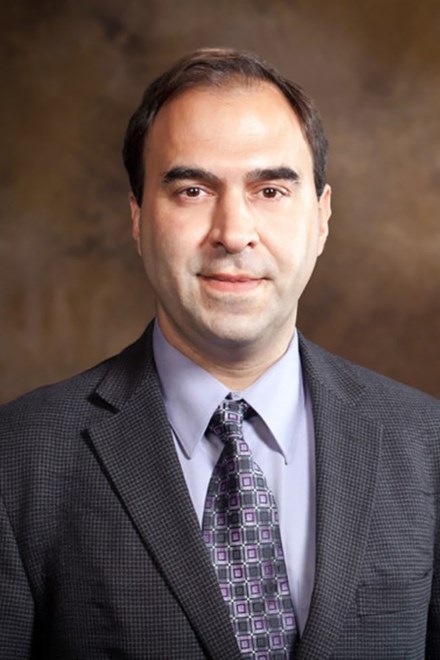
Nikolay Antov is an associate professor of history and director of the Religious Studies program at the Fulbright College of Arts and Sciences. A historian of the early modern Ottoman Empire, he earned his bachelor’s degree at the American University in Bulgaria, after which he went on to study Ottoman history at Bilkent University in Turkey, and completed his doctoral studies in Islamic history at the University of Chicago. Since joining the University of Arkansas in 2011, he has been teaching courses in Islamic civilization, Ottoman history, history of the early modern Islamic empires, and history of the Crusades. His research interests include the formation of Muslim communities and the relations between Muslims and non-Muslims in the early modern Ottoman Empire, Sufism, popular Islam, and sainthood in the pre-modern Islamic world, comparative religion, and the late Crusades. He is the author of The Ottoman Wild West: The Balkan Frontier in the Fifteenth and Sixteenth Centuries (Cambridge University Press, 2017). His research has been supported by the Social Science Research Council, the National Endowment for the Humanities, and the American Research Institute in Turkey.
Modern Iran
HNRS 401H3
Milad Odabaei
Spring 2027
T/TH 11:00 a.m. to 12:15 p.m.
GEAR 243
Course application required. Due October 8, 2026 at 5 pm.
Students will examine everyday life in Iran in relation to Persianate ethical and literary traditions, Islamic philosophy and theology and exchanges of people and ideas across national boundaries, including those between Iran and the United States. The course considers the historical and social contexts of revolution, war, and economic change and their effects on Iranian society.
Along the way, students will strengthen their close reading, analytical writing, and discussion skills while developing a broader understanding of contemporary Iran and its historical, cultural and social contexts.
Photo by Gohar Dashti.
Course Credits:
All Students:
- Honors Credit
- can count as an anthropology elective or for students majoring in anthropology, it can satisfy "geographical area" requirement.
- For Walton Honors students, this course can count as one of the two required colloquium credits (but the other must be from Walton).
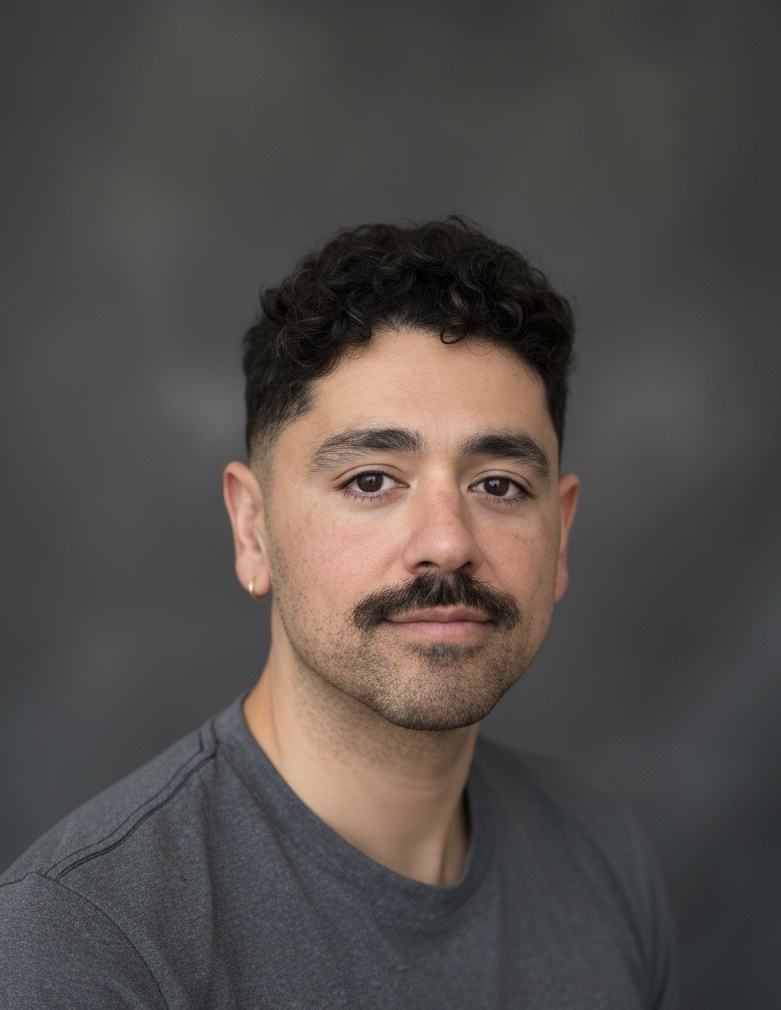 Milad Odabaei is assistant professor of anthropology at the University of Arkansas, where he is
also affiliated with the Middle East studies, gender studies, and global and international
studies programs. His expertise spans political and psychological anthropology, the
anthropology of religion, critical theory, and modern Iranian thought. His research
examines religion and revolution, violence and destruction, migration and refuge,
translation, and gender and sexuality. He has conducted ethnographic and archival
research in Tehran and Qom, Iran; Iranian Kurdistan; and North America among LGBTQ+
refugees and Iranian diasporic communities.
Milad Odabaei is assistant professor of anthropology at the University of Arkansas, where he is
also affiliated with the Middle East studies, gender studies, and global and international
studies programs. His expertise spans political and psychological anthropology, the
anthropology of religion, critical theory, and modern Iranian thought. His research
examines religion and revolution, violence and destruction, migration and refuge,
translation, and gender and sexuality. He has conducted ethnographic and archival
research in Tehran and Qom, Iran; Iranian Kurdistan; and North America among LGBTQ+
refugees and Iranian diasporic communities.